
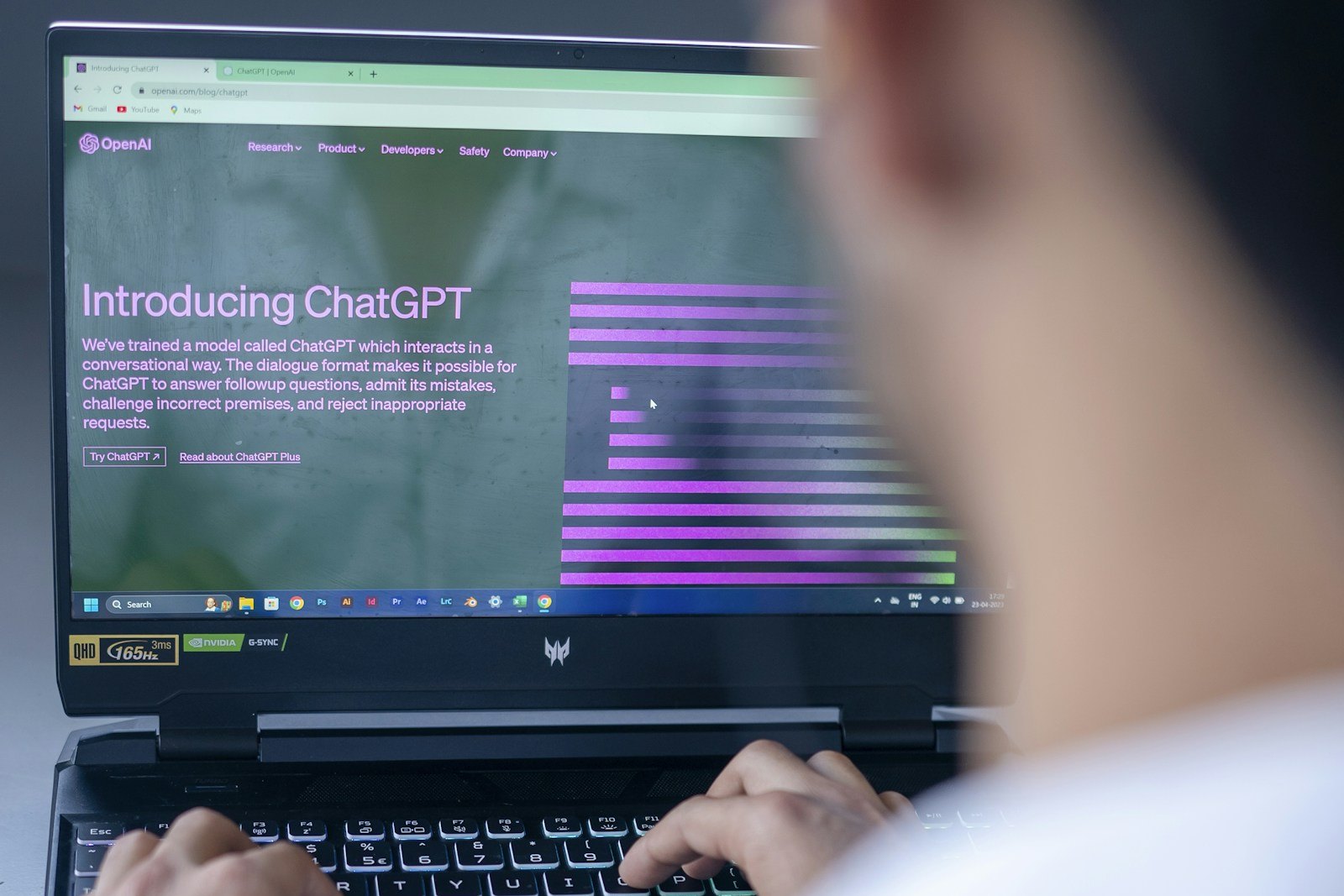
The term Shadow AI describes the use of artificial intelligence tools inside an organization without the IT department's knowledge and without approval. It is a direct evolution of the Shadow IT phenomenon, but with one characteristic that makes it worse: the information sent does not just pass to a third party — it may be used to train a model.
Where the Information Leaks
The recurring patterns in industry surveys are similar across organizations: developers paste code and API keys into a chatbot to track down a bug, support and sales staff summarize inquiries and contact lists, and analysts run financial forecasts and contracts through free assistants.
Note that none of these actions is malicious. All of them are honest attempts to work faster. That is exactly why a blanket ban does not work — it only pushes the use further underground.
The Problem With the Personal Account
The hardest part to detect is use through a personal account on a free tier. Such traffic does not appear in the organization's logs, there is no contract covering it, and there is no way to request deletion. Under Amendment 13 to Israel's Privacy Protection Law, this is a transfer of personal information to a third party without a legal basis.
A point many people miss: with some vendors, content that is sent is used to improve the model unless the user actively opts out — a step most people never take.
What Does Work
The approach that succeeds is not a ban but an alternative. An organization that provides employees with an approved AI tool, in an enterprise version, with an agreement stating that the information is not used for training — reduces the incentive to use personal tools to almost zero.
It is worth recalling the context: IBM's 2026 report found that the common causes of breaches targeting AI were compromised APIs and cloud misconfigurations — in other words, basic control of the environment, not advanced AI technology.
What This Means for Your Organization
- Before you ban — check what is already happening. A short anonymous survey of employees will give a more accurate picture than any monitoring tool.
- Provide an approved alternative. An employee who has a good, authorized tool will not look for another one.
- In the contract with the AI vendor — make sure it states explicitly that the information is not used for training, and where it is stored geographically.
- Train employees on the difference between a personal account and an enterprise version. Most of them simply do not know there is a difference.